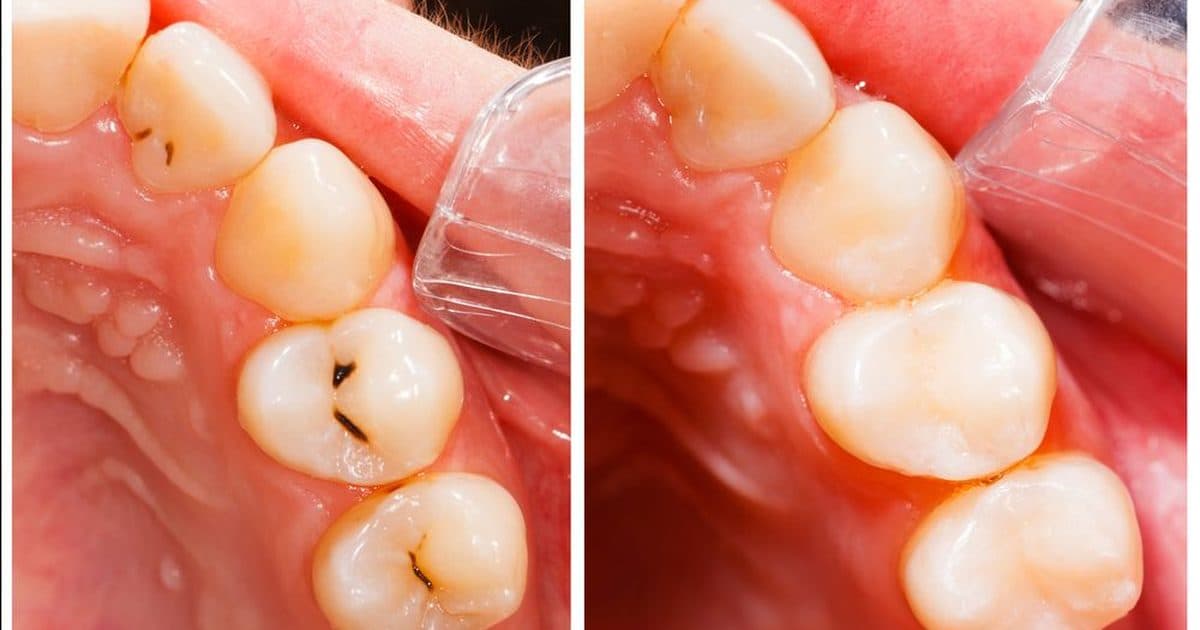
It is common for a tooth to feel sensitive to cold, sweet or biting pressure after a filling. In most cases it settles on its own within a couple of weeks. Occasionally it points to something that needs a small adjustment. Here is how to tell the difference.
Why a filled tooth is sensitive
- The nerve was irritated. Removing decay close to the pulp inflames it temporarily, even when the decay is fully removed.
- The tooth was already deep. The deeper the cavity, the closer the work to the nerve, and the longer settling can take.
- The filling is slightly high. If the new filling meets the opposite tooth before the others do, every bite overloads it — the tooth feels tender when chewing.
- Composite fillings shrink a little as they set, which can create a tiny stress at the tooth margin that causes cold sensitivity for a while.
- Exposed root edges near the gum line if the cavity extended there.
What is normal
- Cold sensitivity that is sharp but short, fading within seconds
- Mild tenderness on chewing in the first few days
- Steady improvement over one to three weeks
Use a desensitising toothpaste, avoid very cold drinks on that side for a few days and chew on the other side initially.
What is not normal — book a check
- Pain on biting that does not improve after a week, or gets worse: the bite probably needs adjusting, a two-minute fix
- Lingering ache after cold that lasts minutes rather than seconds
- Spontaneous throbbing pain, especially at night
- Sensitivity that is worsening after two or three weeks
- A rough edge, a gap you can feel with floss, or a piece of filling that has chipped
Lingering or spontaneous pain suggests the pulp is not recovering, and the tooth may need root canal treatment to settle for good. Catching this early prevents an abscess.
Why tooth-coloured fillings are placed in layers
Composite is bonded and cured in thin layers precisely to reduce shrinkage stress and the sensitivity that goes with it. Isolation from saliva during placement also matters for a good seal. Read about tooth-coloured fillings in Rajkot and how they compare with silver amalgam.
Protecting a deep filling
Very large fillings leave thin walls of tooth that can crack under chewing. The dentist may recommend an onlay or crown instead of a huge filling for exactly this reason.
Common questions
How long can sensitivity last after a filling? Usually a few days to two or three weeks. Deep fillings can take a little longer, but the trend should be towards improvement.
Can a filling be redone if it stays sensitive? Yes. If the bite adjustment does not help, the filling can be checked, re-lined or replaced.
Does a high filling damage the tooth? Left high, it can cause pain, cracks and jaw discomfort. It is a quick adjustment — do not wait for it to "wear in".
Still sensitive weeks after a filling? Book a quick check at Lifedent, Rajkot.