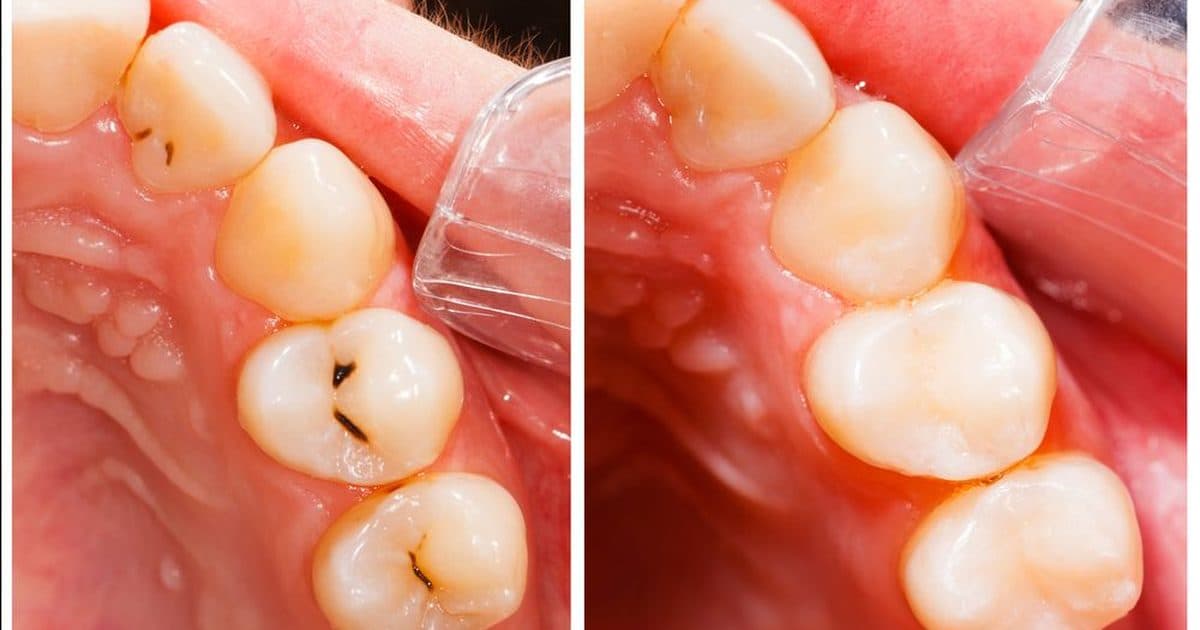
A cavity does not appear overnight. Decay moves through stages, and the treatment needed — and the cost in tooth structure — grows with each one. Catching it early is the difference between a quick fluoride application and a root canal.
Stage 1: White spot (early demineralisation)
Acid from plaque bacteria starts dissolving minerals from the enamel. A chalky white patch appears, often near the gum line or between teeth. There is no hole yet.
Treatment: this stage is reversible. Professional fluoride treatment, better brushing, cutting down on sugary snacks and sometimes a sealant let the enamel re-harden. No drilling.
Stage 2: Enamel cavity
The surface breaks and a small hole forms in the enamel. It may look brown or black and is usually painless.
Treatment: a small tooth-coloured filling after cleaning out the decayed enamel. Quick, often done without anaesthesia.
Stage 3: Dentine decay
Decay reaches the softer dentine beneath the enamel and spreads faster. Sensitivity to sweet, cold or hot starts; food may lodge in the hole.
Treatment: a filling, or an inlay/onlay or crown if the cavity is large. This is still a straightforward visit, but the tooth loses more structure.
Stage 4: Pulp involvement
Bacteria reach the pulp — the nerve inside the tooth. Pain becomes spontaneous, throbbing and worse at night. See toothache at night.
Treatment: root canal treatment to remove the infected pulp, followed by a crown. At Lifedent most root canals are completed in a single sitting.
Stage 5: Abscess
Infection spreads beyond the root tip into the bone, forming an abscess. Swelling of the gum or face, a bad taste, fever and severe pain can follow. This is a dental emergency.
Treatment: drain the infection, root canal if the tooth can be saved, or extraction if it cannot, then replacement planning.
Why early stages are often missed
Stages 1 to 3 are frequently painless. Decay between teeth or under old fillings is invisible without X-rays, which is why six-monthly check-ups with periodic bitewing X-rays matter — not just visits when something hurts.
Preventing the first stage
- Brush twice daily with fluoride toothpaste; clean between teeth daily
- Limit sugary and sticky snacks between meals
- Professional cleaning and check-up every six months
- Fissure sealants for children's molars
Common questions
Can a cavity heal by itself? Only the white-spot stage can re-harden. Once a hole has formed, the decayed part must be removed and filled.
Why doesn't my cavity hurt? Enamel has no nerves and dentine only partly. Pain arrives late in the process, which is why waiting for pain is a poor strategy.
How fast does decay progress? It varies with diet, saliva and hygiene — months to years. Decay under a leaking filling or in a dry mouth moves faster.
Notice a spot or sensitivity? Book a check-up while it is still a small filling.