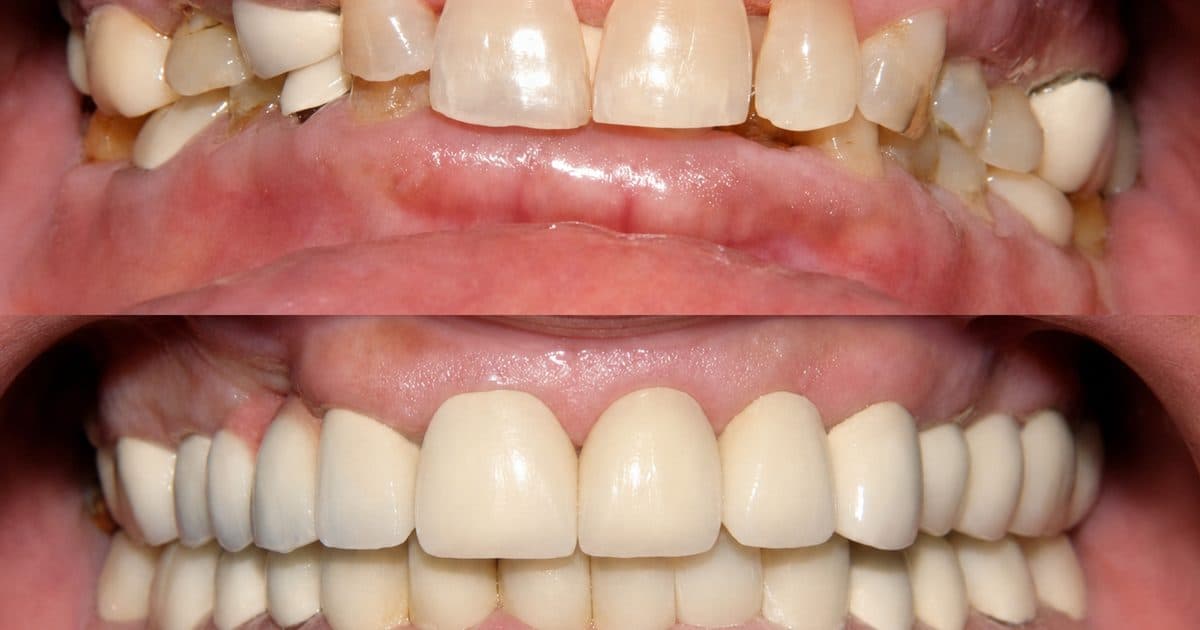
A conventional denture rests on the gums and is held by suction and the muscles of the mouth. For many people, especially in the lower jaw, it moves when they eat or talk. An implant-supported denture (overdenture) solves that by clipping onto two or more implants.
How a conventional denture works
- Sits on the gum ridge; held by suction, saliva and the cheeks and tongue
- Quick to make and the least invasive option
- Tends to loosen over the years because the bone under it shrinks without tooth roots to stimulate it
- Lower dentures are the hardest to keep stable
Full details: dentures in Rajkot.
How an implant-supported denture works
- Two to four implants are placed in the jaw and left to heal for 8 to 12 weeks
- Attachments (ball or locator type) are fitted to the implants and matching housings inside the denture
- The denture snaps on and off: firm while eating and speaking, removable for cleaning
- The implants stimulate the bone, slowing the shrinkage that loosens conventional dentures
Details: implant-supported dentures in Rajkot.
Side by side
| Conventional denture | Implant-supported denture | |
|---|---|---|
| Stability | Relies on suction and muscles | Locked onto implants |
| Chewing | Limited; soft foods easier | Much stronger |
| Bone | Shrinks over time | Better preserved around implants |
| Surgery | None | Minor implant surgery |
| Cleaning | Remove and clean daily | Remove and clean daily; brush around implants |
| Maintenance | Relines over time | Attachment parts replaced as they wear |
Where fixed teeth (All-on-4) fit in
An overdenture is still removable. If you want teeth that stay in permanently, a fixed bridge on four to six implants — All-on-4 — is the next step. It uses more implants and feels closest to natural teeth; an overdenture is simpler, uses fewer implants and is easier to clean for some patients. The scan and a conversation about your priorities decide which is right.
Who benefits most
- Anyone whose lower denture moves while eating
- People with sore spots from a denture rubbing
- Those who avoid social eating because of a loose denture
- Patients whose bone has shrunk so much that a new conventional denture would not stay in
Common questions
Can my current denture be used? Sometimes. If it fits well, attachment housings can be fitted into it after the implants heal. Otherwise a new denture is made to match the implants.
How many implants are needed? Typically two in the lower jaw; two to four in the upper jaw, where the bone is softer.
Am I too old for implants? Age itself is not a limit. Bone volume and general health are what the implantologist assesses.
Tired of a loose denture? Book an assessment with our prosthodontist in Rajkot.