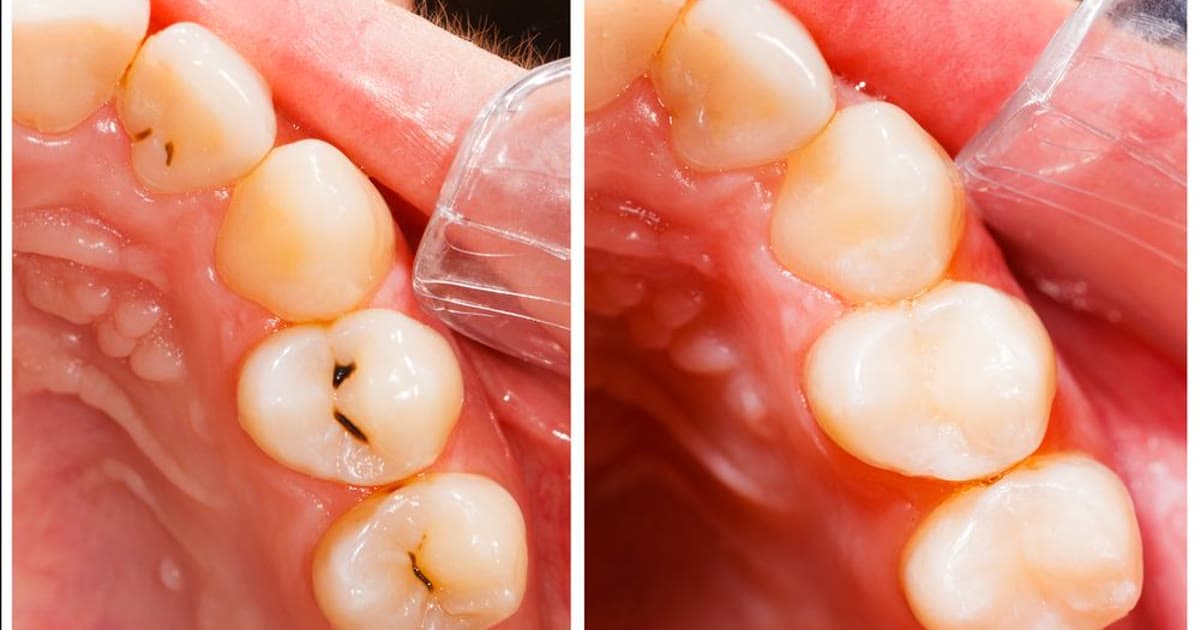
A chipped or broken tooth can usually be repaired — which method depends on how much tooth is lost and whether the nerve is affected. What you do in the first hour matters too.
What to do immediately
- Save any broken pieces and keep them in milk or clean water.
- Rinse your mouth with warm water.
- Use a cold compress on the outside of the cheek for swelling.
- Avoid chewing on that side until it has been assessed.
- If the tooth is painful, sensitive to air, or bleeding from the centre, see a dentist promptly — that suggests the nerve is exposed.
Repair options
Tooth-coloured bonding. For small chips. Composite resin is shaped and bonded to rebuild the edge, matched to your tooth shade, usually in one visit.
Veneer. For a front tooth with a visible chip or an uneven edge, a thin facing covers the front surface and restores shape and colour.
Crown. Where a large piece has broken away or the tooth is cracked, a crown covers the whole tooth and protects it from splitting further.
Root canal treatment, then a crown. If the break has reached the pulp, the infection is treated first and the tooth is then protected.
Extraction and replacement. Only when the tooth cannot be saved — for example a break below the gum line. The gap is then restored with an implant or bridge.
Why a small chip still needs checking
A chip changes how forces travel through the tooth, and a rough edge can cut the tongue or lip. Cracks are not always visible: a tooth that hurts when biting may have a crack that only an examination will find.
Common questions
Will the repair be noticeable? Bonding and veneers are shade-matched to the surrounding teeth and blend in when well done.
How long does a bonded repair last? It varies with the size of the repair, your bite, and habits such as grinding or biting hard objects.
My tooth is not painful — can I wait? Have it assessed. Painless does not mean undamaged, and small repairs are simpler than large ones.
Read more about tooth-coloured fillings, crowns and bridges and smile designing, or contact us.