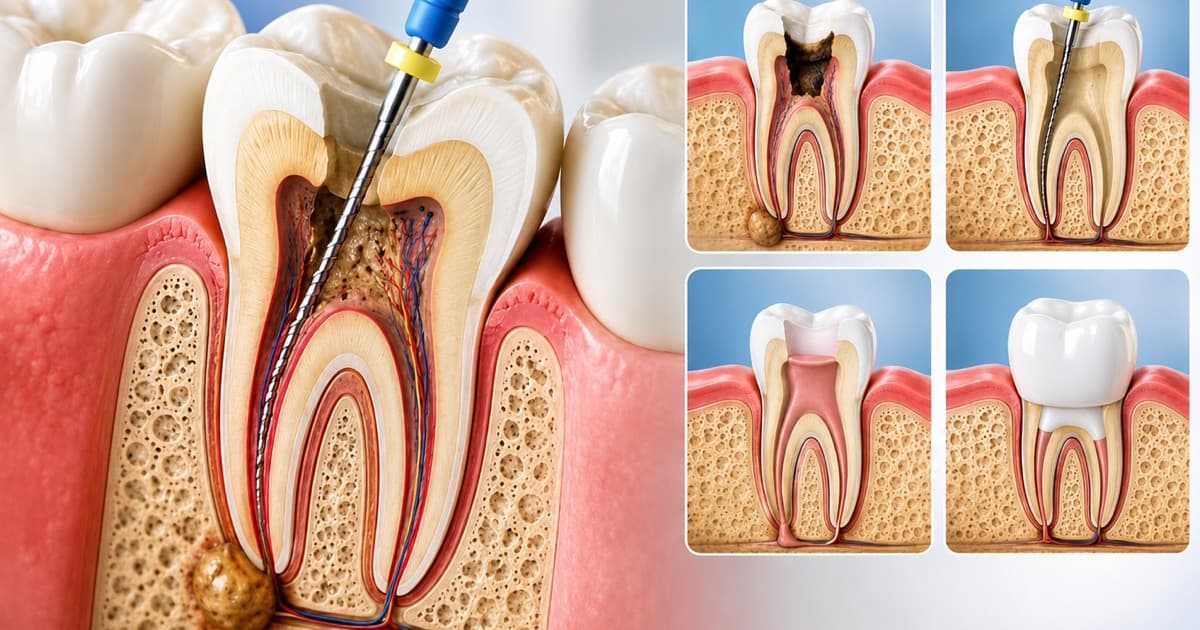
A single-sitting root canal means the infection inside the tooth is cleaned, shaped and sealed in one appointment instead of two or three. When the tooth is suitable for it, the results are as reliable as multi-visit treatment.
What a root canal actually does
Inside every tooth is a soft pulp containing nerves and blood vessels. When decay or a crack lets bacteria reach it, the pulp becomes infected, which causes pain and can spread to the bone around the root. Root canal treatment removes that infection from inside the tooth, cleans the canals and seals them — so the tooth stays in place instead of being pulled out.
When can it be done in one sitting?
It depends on the tooth and the infection, which the dentist checks at the first appointment. A single sitting is often possible when the infection is confined to the tooth and the canals can be cleaned thoroughly in one go. Where there is severe swelling or active discharge, treatment may be staged over more than one visit — that decision is clinical, not a matter of preference.
Does it hurt?
The treatment itself is done under local anaesthesia. Most patients arrive in pain from the infection, and that is the pain the treatment removes. Some tenderness while biting for a few days afterwards is normal.
Why a crown is recommended afterwards
A treated tooth can become more brittle. A crown protects it from cracking, restores chewing strength, and returns the tooth to its natural shape — which is why a crown is advised after most root canal treatments, particularly on back teeth that take the heaviest chewing load.
Who benefits most from a single sitting?
- People in severe pain who want it resolved without repeated visits.
- Patients travelling from nearby towns, for whom each appointment is a journey.
- NRI patients visiting Gujarat for a limited time — treatment can be planned around a return flight.
What helps the treatment last
- Have the recommended crown fitted rather than leaving the tooth unprotected.
- Keep up brushing, cleaning between the teeth, and regular check-ups.
- Report any returning pain or swelling promptly instead of waiting.
Common questions
Is it better to extract the tooth instead? Saving a natural tooth is almost always preferable. A natural root keeps the surrounding bone stimulated; a gap allows neighbouring teeth to drift and bone to shrink.
How long does a root-canal-treated tooth last? With a crown and good hygiene, many last for decades.
Can a tooth be treated again if the problem returns? Yes — re-root canal treatment (retreatment) is possible in many cases.
Read more about root canal treatment in Rajkot or book a consultation.