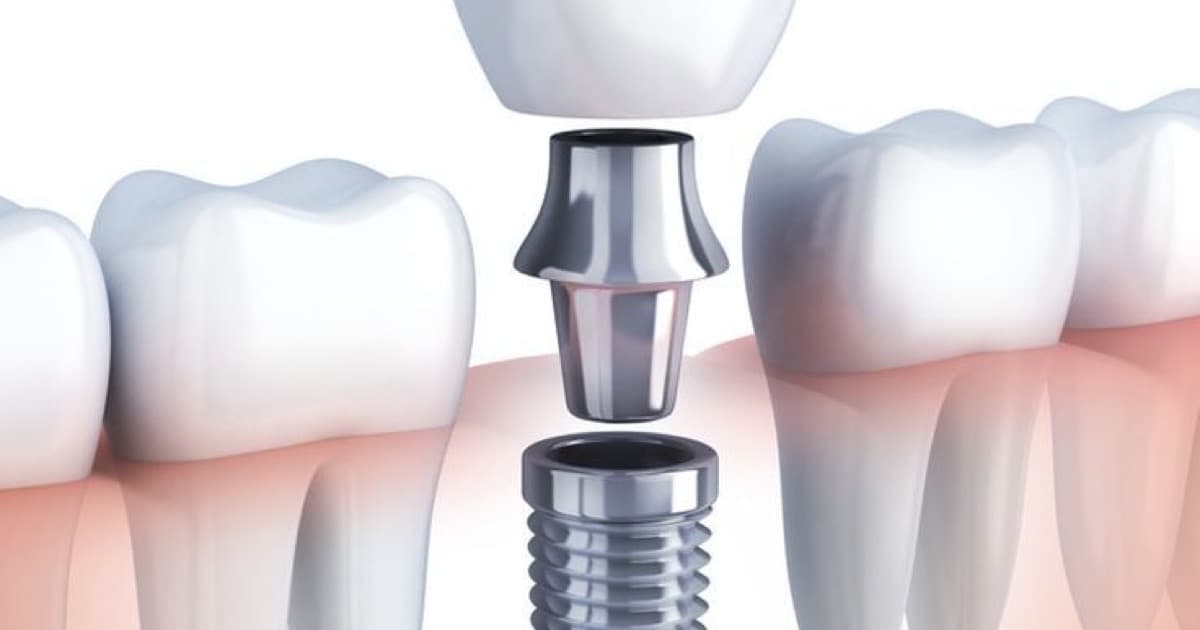
A single-tooth dental implant takes about 10 to 14 weeks in total, spread across a few short appointments. Most of that time is not spent in the dental chair — it is healing time, while the implant bonds with your jawbone.
Why does an implant take weeks?
An implant replaces the root of a missing tooth with a titanium post placed in the jawbone. Before a crown can be fitted on top, the bone needs to grow firmly around that post. Rushing this step is what causes implants to fail, so the waiting period is part of the treatment, not a delay.
What happens at each visit
- Consultation and 3D scan. The tooth, gums and bone are examined and a CBCT scan shows exactly how much bone is available and where the implant should be placed.
- Implant placement. The implant is placed under local anaesthesia. Mild soreness for two to three days afterwards is normal and is managed with prescribed medicine.
- Healing. A soft diet is recommended for roughly 8 to 12 weeks while the bone bonds to the implant.
- Final crown. Once healing is confirmed, a crown matched to your natural teeth is fitted. From then on the implant can take normal chewing forces.
What about a full arch of teeth?
For All-on-4 and All-on-6 treatment, where one arch of teeth is supported by four or six implants, provisional fixed teeth are fitted within 3 to 5 days of surgery — so you are not left without teeth. The final prosthesis is fitted about 3 to 4 months later.
If you live outside Rajkot
Patients travelling from Gondal, Jetpur, Morbi, Jamnagar or further need to plan two stages rather than two hundred trips. Appointments are scheduled in advance so you know how many journeys the treatment needs before it begins.
If you live abroad and visit Gujarat occasionally, implants are usually planned across two visits: placement on the first trip, and the final crown on a later one. Sending your X-rays on WhatsApp before you travel means the plan is ready when you land — see dental care for NRI patients.
Will it last?
A well-maintained implant can last a lifetime, and global studies show success rates above 95 percent at ten years. The crown on top may need replacing after 15 to 20 years; the titanium implant itself is designed to be permanent.
Is the procedure painful?
The procedure is performed under local anaesthesia and is painless. The soreness that follows for two or three days is comparable to a tooth extraction and settles with the medicine prescribed.
Common questions
Can older patients get implants? Age alone is not a barrier. Implants are placed successfully in patients in their seventies and eighties when general health is adequate and enough bone is present.
Can I eat normally afterwards? A soft diet is advised during healing. Once the final crown is fitted, implants handle the full range of normal chewing.
What if I have been missing the tooth for years? The bone in that area shrinks over time, so an assessment is needed — sometimes bone grafting is recommended before the implant.
Read more about dental implants in Rajkot, or book a consultation to find out what your case needs.